Heat Exposure: Risks, Effects, And Smart Protection
Every year, millions of people around the world face problems because of heat exposure. Whether you live in a hot climate, work outside, or enjoy outdoor sports, understanding heat exposure can protect your health—and sometimes save your life. As global temperatures rise, the dangers of heat become more serious for everyone, not just in traditionally hot regions.
Many people underestimate how quickly heat can harm the body, and few know how to spot the warning signs before it’s too late. Let’s explore what heat exposure really means, how it affects you, and, most importantly, how to stay safe.
What Is Heat Exposure?
Heat exposure happens when your body is in a hot environment and cannot get rid of heat fast enough. This can be due to high air temperature, humidity, direct sunlight, or physical activity. The human body works best at a core temperature of about 37°C (98.6°F). If your body absorbs more heat than it can release, your internal temperature rises, leading to health problems.
Common situations that cause heat exposure include:
- Working outdoors in the sun (construction, farming)
- Exercising or playing sports on hot days
- Sitting in a car with windows closed
- Living in buildings with poor ventilation during a heatwave
Even short periods of heat exposure can be dangerous, especially for children, older adults, and people with medical conditions.
How The Body Responds To Heat
When you are exposed to heat, your body tries to maintain a normal temperature using several methods:
- Sweating: The body releases sweat, which cools the skin as it evaporates.
- Increased blood flow: Blood vessels widen, sending more blood to the skin to release heat.
- Breathing faster: This helps remove a small amount of heat.
If these methods are not enough, your core temperature will rise. High humidity makes sweating less effective, because sweat doesn’t evaporate as easily.
Why Some People Are At Higher Risk
Certain groups find it harder to deal with heat:
- Elderly people: Their bodies may not sense heat as well or sweat effectively.
- Babies and young children: They have a higher body surface area compared to weight, causing them to heat up faster.
- People with heart, lung, or kidney conditions: Their bodies struggle to handle extra stress from heat.
- Athletes and outdoor workers: They generate more heat through activity.
- People taking certain medications: Some drugs reduce the body’s ability to sweat or regulate temperature.
Understanding who is at risk helps in giving extra care during heatwaves or hot days.
Types Of Heat-related Illnesses
Heat exposure can cause a range of health problems, from mild to life-threatening. Here are the most common types:
1. Heat Rash
This is a skin irritation caused by excessive sweating. It usually looks like red clusters of small blisters, often in body folds or where clothing rubs.
Symptoms:
- Itchy, red skin
- Small bumps or blisters
How to treat: Keep the skin cool and dry, wear loose clothing, and avoid scratching.
2. Heat Cramps
Heat cramps are painful muscle spasms, often in the legs, arms, or abdomen. They happen after heavy exercise in hot weather, especially if you lose salt through sweat.
Symptoms:
- Sudden muscle cramps
- Heavy sweating
How to treat: Stop activity, rest in a cool place, drink water or an electrolyte drink, and gently stretch the affected muscles.
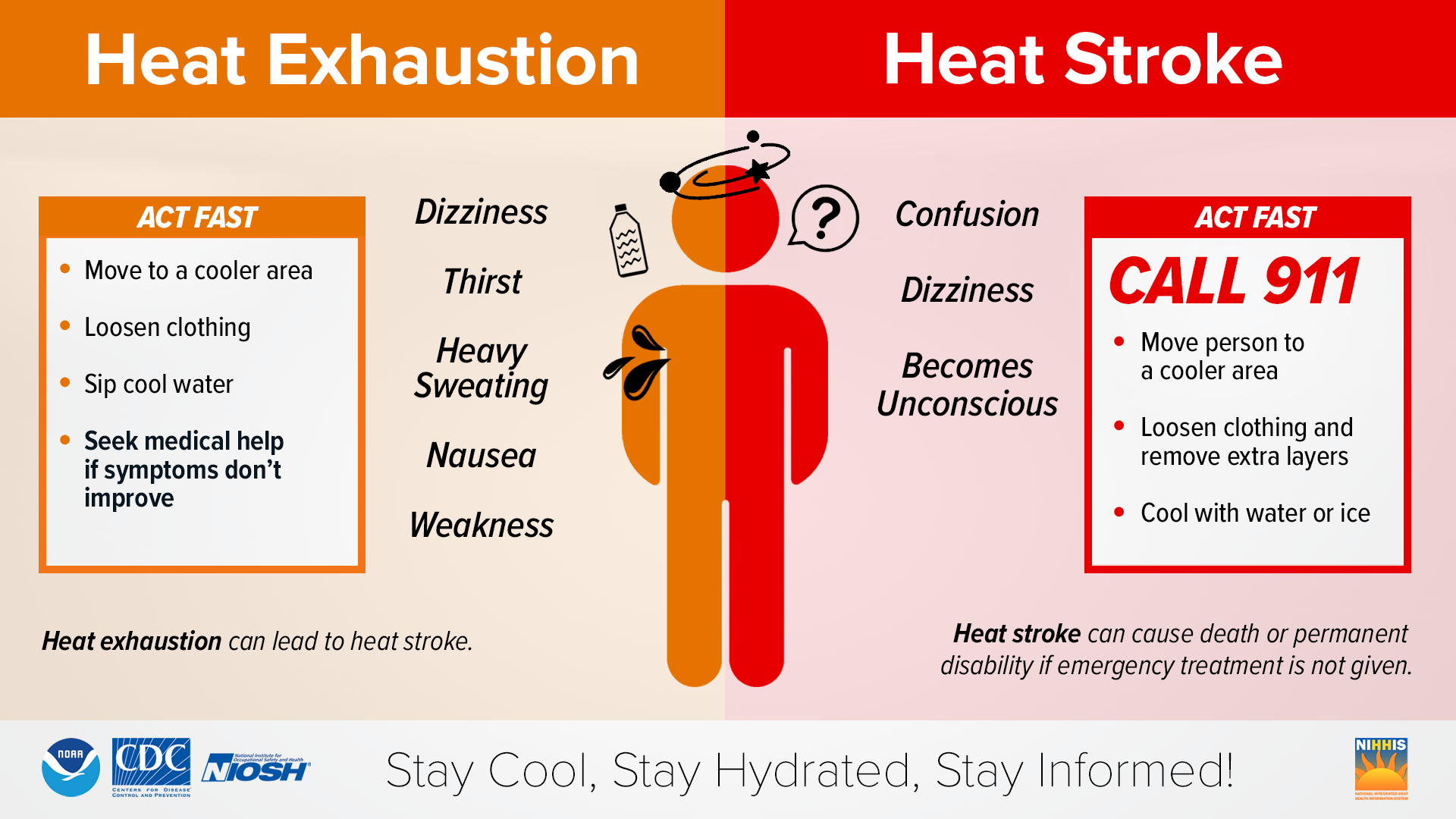
3. Heat Exhaustion
This is a more serious condition. The body loses too much water and salt, and cannot cool itself properly.
Symptoms:
- Heavy sweating
- Weakness or tiredness
- Dizziness or fainting
- Nausea or vomiting
- Headache
- Cool, moist skin
How to treat: Move to a cooler location, lie down, loosen clothing, sip water, and use cool, wet cloths. If symptoms do not improve, seek medical help.
4. Heat Stroke
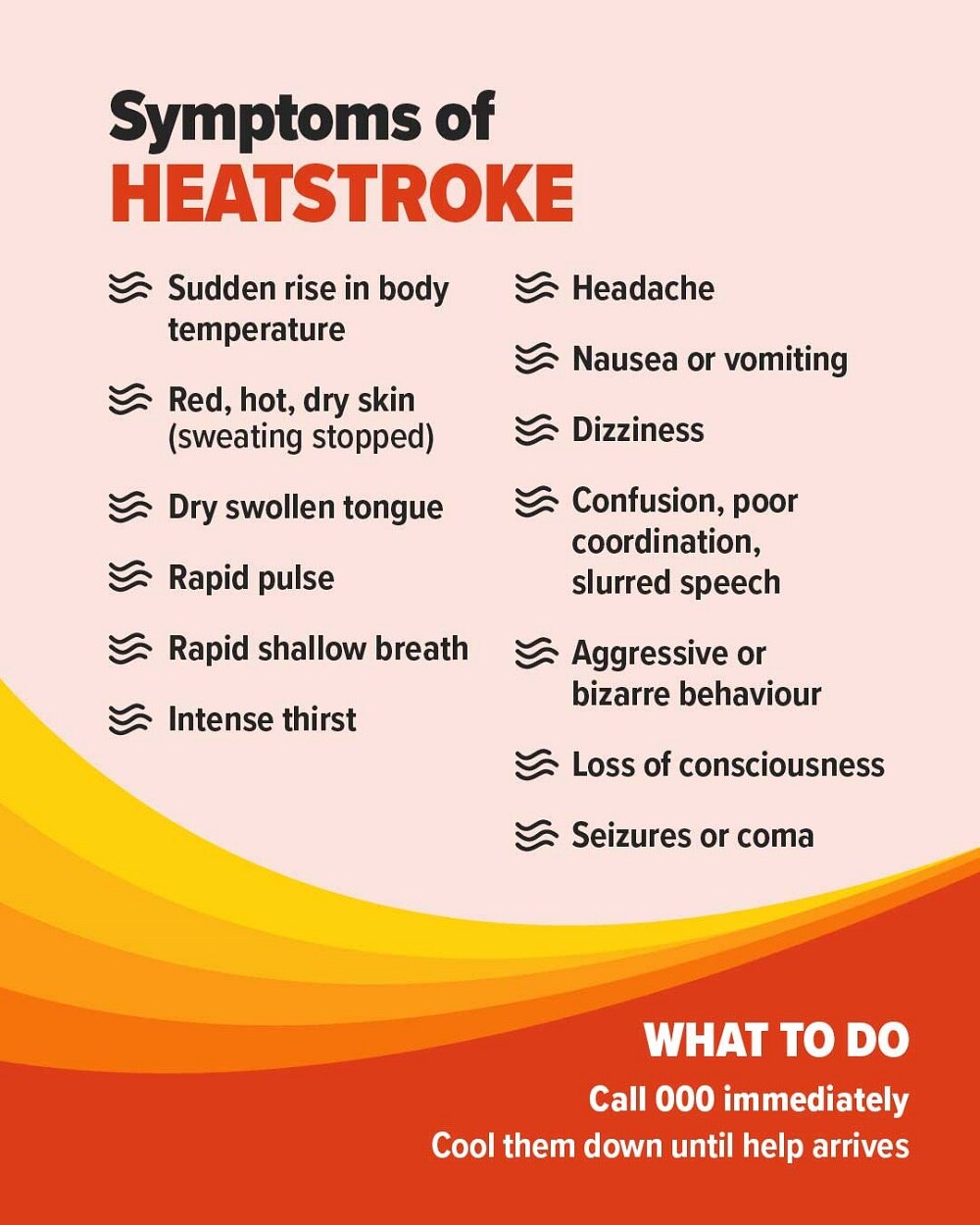
Heat stroke is the most serious form of heat illness. It is a medical emergency and can be fatal if not treated immediately.
Symptoms:
- High body temperature (above 40°C / 104°F)
- Confusion, agitation, or unconsciousness
- Hot, dry skin (or sometimes heavy sweating)
- Rapid heartbeat
- Seizures
How to treat: Call emergency services immediately. Move the person to a cool place, remove excess clothing, and cool the body with water, fans, or ice packs. Do not give fluids if the person is confused or unconscious.
Heat Syncope
Some people may faint (syncope) after standing in the heat for a long time. This happens because blood pools in the legs, reducing blood flow to the brain.
Heat Edema
This is swelling, usually in the ankles or feet, caused by blood vessels expanding in hot weather.
Heat Tetany
This is a rare condition with muscle spasms, caused by rapid breathing and loss of carbon dioxide during heat stress.
Data: How Common Is Heat Illness?
To see how serious heat exposure is, let’s look at some real numbers.
| Condition | Estimated Cases per Year (US) | Deaths per Year (US) |
|---|---|---|
| Heat Cramps / Rash | Unknown (mild, often unreported) | Rare |
| Heat Exhaustion | Over 20,000 ER visits | Less than 100 |
| Heat Stroke | 6,000–9,000 ER visits | 600–1,200 |
Globally, heatwaves cause tens of thousands of deaths each year. For example, the 2003 European heatwave killed over 70,000 people.
Credit: www.sahealth.sa.gov.au
What Increases Heat Exposure?
Understanding what makes heat exposure worse can help you avoid trouble. Here are the top factors:
- High temperature: More heat in the environment means a higher risk.
- High humidity: Sweat cannot evaporate as easily, so you cool down more slowly.
- Direct sunlight: Being in the sun raises your skin and body temperature.
- No wind: Wind helps sweat evaporate and cools you.
- Heavy clothing: Clothes that trap heat or do not let sweat evaporate make you hotter.
- Physical activity: Exercise or work generates extra body heat.
- Lack of water: Dehydration makes it hard for your body to sweat and cool down.
- Crowded or poorly ventilated spaces: Heat builds up quickly when air cannot move.
The Heat Index: How It Affects Risk
The heat index combines air temperature and humidity to show how hot it “feels.” For example, 32°C (90°F) with high humidity feels much hotter than 32°C with dry air.
| Air Temp (°C) | Humidity (%) | Feels Like (°C) |
|---|---|---|
| 30 | 40 | 32 |
| 30 | 80 | 38 |
| 35 | 40 | 38 |
| 35 | 80 | 54 |
You can see that high humidity can make a big difference, even at the same temperature.
Short-term And Long-term Effects Of Heat Exposure
Heat exposure does not just cause immediate illness. It can have short-term and long-term effects.
Short-term Effects
- Dehydration: Loss of water and salt, leading to weakness and confusion.
- Heat illnesses: From mild rash to severe heat stroke.
- Accidents: Dizziness or fainting can cause falls or injuries.
- Reduced performance: Physical and mental tasks become harder.
Long-term Effects
- Kidney damage: Repeated dehydration raises the risk of kidney stones and chronic kidney disease.
- Heart strain: Extra work for the heart can worsen heart disease.
- Worsening of chronic diseases: Heat can make diabetes, lung, and nerve problems worse.
- Increased sensitivity: After a heat illness, your body may not handle heat as well in the future.
Many people miss the fact that even mild, repeated heat exposure—without causing heat stroke—can still harm organs over time.
Credit: www.petersonhealth.com
Heat Exposure At Work
Millions of people work in hot environments. Construction, agriculture, delivery, kitchens, and factories are high-risk jobs. Employers must provide safe conditions, but workers also need to know the risks.
Common Workplace Risks
- Long hours in the sun
- Heavy clothing or protective gear
- Limited breaks
- No access to water or shade
Employers should train workers, adjust schedules, and provide cool rest areas. Still, workers should watch for symptoms in themselves and others. Peer monitoring can catch heat illness early.
Regulations And Standards
Many countries have rules for workplace heat safety. For example, the US OSHA recommends:
- Drinking water every 15–20 minutes
- Rest breaks in the shade
- Training on recognizing symptoms
However, not all employers follow these rules, so workers should know their rights and ways to protect themselves.
Heat Exposure In Children And Older Adults
Children and older adults are most at risk from heat. Their bodies do not cool down as well.
Unique Risks For Children
- Fast heat gain: Children’s bodies heat up 3–5 times faster than adults.
- Forget to drink: Kids may not realize they need water.
- Car danger: Even a few minutes in a parked car can be deadly.
Unique Risks For Older Adults
- Less sweating: Aging skin and glands do not sweat as much.
- Chronic illness: Conditions like diabetes or heart disease make it harder to handle heat.
- Medication: Some drugs increase heat risk.
Families should check on older relatives during hot weather and never leave children alone in cars.
Credit: healthcare.utah.edu
How To Prevent Heat Exposure Problems
Preventing heat-related illness is often simple, but it requires attention and planning.
1. Stay Hydrated
Drinking enough water is the most important step. Most adults need at least 2–3 liters per day in hot weather, more if active. Avoid alcohol and caffeine, which dehydrate you.
2. Wear The Right Clothing
- Choose light-colored, loose-fitting, and breathable fabrics.
- Wear a wide-brimmed hat and sunglasses when outdoors.
3. Take Breaks
Rest in the shade or a cool place regularly, especially during the hottest part of the day (usually 11 a. m. to 4 p. m. ).
4. Use Fans And Air Conditioning
Fans help sweat evaporate, but in extreme heat, air conditioning is best. If you don’t have AC, visit shopping centers, libraries, or cooling centers.
5. Plan Activities For Cooler Times
Exercise or do outdoor work early in the morning or after sunset.
6. Check The Heat Index
Know the heat index before going out. Cancel or postpone activities if it is dangerously high.
7. Never Leave Children Or Pets In Cars
The temperature inside a car can rise by more than 20°C (36°F) in just 10 minutes.
8. Eat Light Meals
Heavy, hot meals add to your body’s heat load. Choose salads, fruits, and light foods.
9. Watch For Symptoms
Learn the early signs of heat illness and teach others.
10. Help Others
Check on neighbors, especially the elderly or those living alone, during heatwaves.
First Aid For Heat Illness
Knowing what to do in the first moments can save a life.
What To Do For Mild Heat Illness
- Move the person to a cool place
- Give water or an electrolyte drink
- Remove excess clothing
- Use cool, wet cloths on skin
What To Do For Heat Stroke
- Call emergency services immediately
- Move the person to shade or an air-conditioned place
- Cool the person with water, fans, or ice packs (armpits, neck, groin)
- Do not give fluids if the person is unconscious or confused
Common Mistakes To Avoid
- Waiting too long to get help in severe cases
- Giving fluids to someone who is not alert (risk of choking)
- Using alcohol rubs (they can irritate the skin and are not effective)
Heat Exposure And Urban Living
Cities can be much hotter than rural areas. This is called the urban heat island effect. Concrete, asphalt, and buildings absorb and release heat, raising temperatures by several degrees.
Why Cities Get Hotter
- Less green space and trees to provide shade
- More surfaces that trap heat
- Higher population density
City dwellers should be extra careful during heatwaves. Simple actions like planting trees, creating green roofs, and using reflective building materials can help reduce urban heat over time.
Climate Change And Heat Exposure
Global warming is making heatwaves more frequent and intense. According to the World Health Organization, the number of people exposed to extreme heat is rising every year.
Examples Of Recent Heatwaves
- In 2021, parts of Canada reached nearly 50°C (122°F), setting all-time records.
- India and Pakistan have experienced deadly heatwaves with temperatures over 45°C (113°F).
Experts predict that by 2050, many cities may experience dangerous levels of heat every year.
Common Myths About Heat Exposure
Believing false information can be risky. Here are some myths and the real facts:
- Myth: Only very old or very young people are at risk.
- Fact: Anyone can develop heat illness, even healthy young adults.
- Myth: If you feel fine, you are safe.
- Fact: Symptoms can develop quickly, and some people do not notice early warning signs.
- Myth: Drinking cold beer helps cool you down.
- Fact: Alcohol actually dehydrates you and can make heat illness worse.
- Myth: Fans are always enough.
- Fact: When the temperature is very high, fans may not prevent heat stroke.
- Myth: You only need to worry during heatwaves.
- Fact: Even normal summer temperatures can be dangerous with high humidity or activity.
Special Considerations For Athletes And Outdoor Workers
Athletes and workers in hot environments need extra caution.
Tips For Athletes
- Train during cooler hours
- Take frequent breaks
- Acclimatize to the heat over 1–2 weeks
- Use sports drinks to replace lost salts
Tips For Outdoor Workers
- Follow workplace safety guidelines
- Use buddy systems (watch each other for symptoms)
- Wear appropriate gear
- Report any symptoms early
When To Return To Activity
After a heat illness, return to activity gradually. Some people need several days or weeks to recover fully.
Heat Exposure: Global Differences
Heat risks and solutions vary by country and region.
Developing Countries
- More people work outdoors
- Less access to air conditioning
- Buildings may not be designed for heat
- Limited public health warnings
Developed Countries
- More elderly people living alone
- Heavy use of air conditioning (risk of power outages during heatwaves)
- Better emergency services but sometimes slow to reach everyone
Non-obvious insight: In some cultures, heavy clothing is worn for religious or social reasons, which can increase heat risk. Education and culturally sensitive solutions are important.
Technology And Innovation In Heat Protection
Modern technology offers new ways to protect against heat.
- Wearable sensors: Devices that alert when body temperature rises too high
- Smart fabrics: Clothes that wick sweat and reflect sunlight
- Heat warning systems: Apps and websites that give real-time alerts
- Community cooling centers: Public places open during heatwaves
Cities and communities should invest in these technologies to save lives.
Comparing Cooling Methods
Not all cooling methods are equal. Here is a comparison of common ways to cool down:
| Method | Effectiveness | Best For |
|---|---|---|
| Drinking cold water | High | Everyone, anytime |
| Cold shower/bath | Very high | Immediate relief, heat stroke |
| Fans | Medium | Mild heat, low humidity |
| Air conditioning | Very high | Extreme heat, vulnerable people |
| Ice packs | High (short-term) | Localized cooling, emergencies |
| Cool cloths | Medium | Quick, portable relief |
How To Prepare For Heatwaves
With climate change, heatwaves will become more common. Preparing ahead of time can make a big difference.
- Install air conditioning or fans if possible
- Stock up on water and light, non-perishable foods
- Check that windows and blinds can block sunlight
- Make a plan to check on family and neighbors
- Know the location of community cooling centers
- Sign up for local heat alerts
Non-obvious insight: People who rely on public transport should plan for delays, as buses and trains may get very hot during heatwaves.
Key Signs You Need Medical Help
Call for emergency help if you or someone else has:
- Confusion, fainting, or seizures
- Very high body temperature
- Hot, dry skin with no sweating
- Difficulty breathing or chest pain
Do not try to “tough it out. ” Quick action saves lives.
Frequently Asked Questions
What Is The Difference Between Heat Exhaustion And Heat Stroke?
Heat exhaustion is the body’s response to losing too much water and salt through sweating. Symptoms include heavy sweating, weakness, and nausea. Heat stroke is much more serious and happens when the body cannot control its temperature. It causes confusion, unconsciousness, and can be fatal if not treated quickly.
How Much Water Should I Drink During Hot Weather?
Adults should drink at least 2–3 liters (about 8–12 cups) per day, more if they are active or sweating a lot. Children need more frequent small drinks. If you feel thirsty or your urine is dark, drink more water.
Can Fans Prevent Heat Stroke During A Heatwave?
Fans can help in mild to moderate heat, but when the temperature is very high, they may not be enough. Air conditioning or cool showers are better for preventing heat stroke in extreme heat.
Are Some Medicines Risky During Hot Weather?
Yes, some medications make it harder for your body to cool down. These include certain blood pressure pills, antidepressants, and diuretics. If you take regular medication, ask your doctor about heat risks.
Where Can I Find More Information About Heat Safety?
For more detailed information and updates about heat exposure and staying safe, visit the Centers for Disease Control and Prevention (CDC) website.
Staying safe from heat exposure is everyone’s responsibility. With simple steps and a little planning, you can enjoy hot weather without risking your health. As heat becomes a bigger challenge worldwide, sharing this knowledge can protect your family, friends, and community.
Comments
Post a Comment