Have you ever wondered how your brain helps you make quick decisions or control your emotions? The anterior mid-cingulate cortex plays a crucial role in these processes.
This small but powerful part of your brain influences how you handle pain, stay focused, and respond to challenges. Understanding it can give you valuable insights into your own behavior and mental health. Keep reading to discover what the anterior mid-cingulate cortex does and why it matters to you every day.
Credit: www.flintrehab.com
Anatomy Of The Anterior Mid-cingulate Cortex
The anterior mid-cingulate cortex (aMCC) plays an important role in the brain's functions. Understanding its anatomy helps us learn how it works. This section explains the location, structure, and connections of the aMCC.
Location Within The Brain
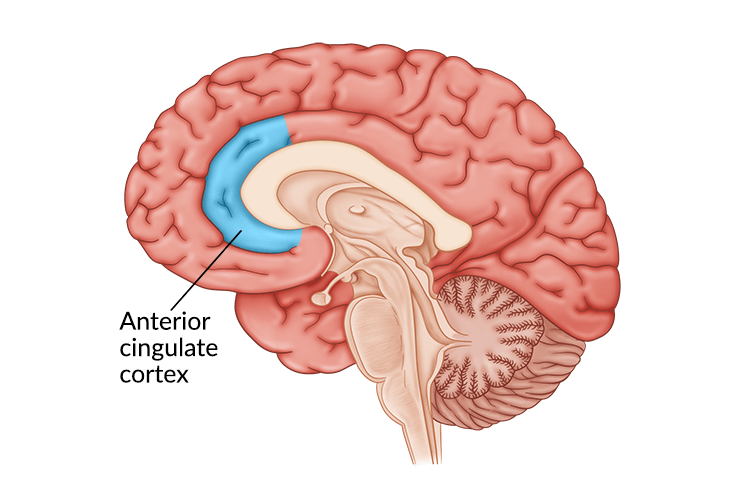
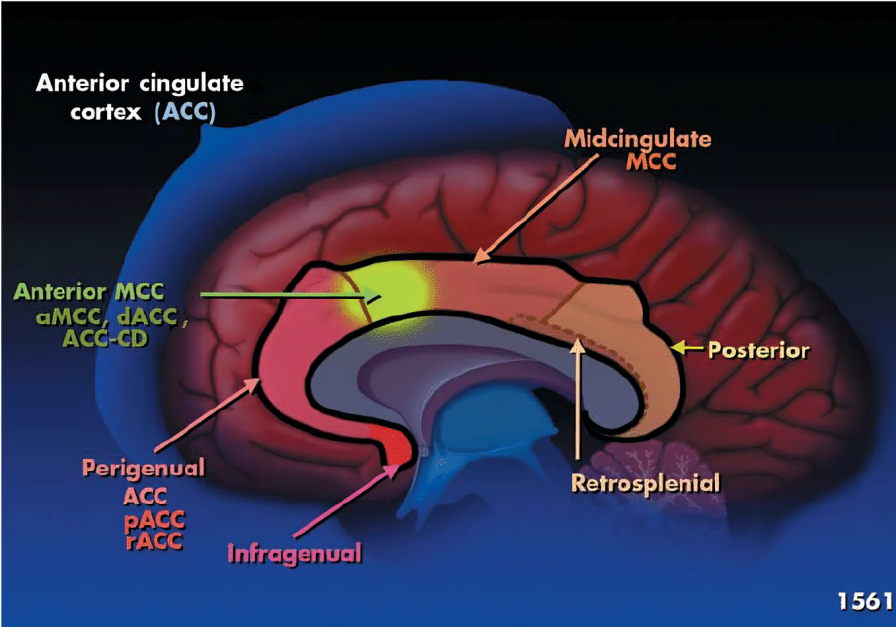
The anterior mid-cingulate cortex is part of the cingulate cortex. It sits in the middle of the brain, above the corpus callosum. The aMCC lies between the anterior cingulate cortex and the posterior mid-cingulate cortex. It forms a curved strip along the inner surface of the brain's hemispheres.
Structural Characteristics
The aMCC has a layered structure typical of the cerebral cortex. It contains six layers of neurons. These layers have different types of cells and connections. The aMCC has a dense concentration of neurons. Its structure supports functions like decision-making and emotion control.
Connections With Other Regions
The aMCC connects with many brain areas. It links to the prefrontal cortex, which handles planning and reasoning. It also connects to motor areas, influencing movement control. The aMCC communicates with the limbic system, important for emotions. These connections allow the aMCC to integrate information from multiple sources.
Credit: www.nad.com
Role In Cognitive Processes
The anterior mid-cingulate cortex (aMCC) plays a key role in many cognitive processes. It helps the brain handle complex tasks. This brain area works with other parts to guide thinking and behavior. Understanding its functions reveals how we make choices, notice mistakes, and stay focused.
Decision Making
The aMCC is active during decision making. It helps weigh options and predict outcomes. This area tracks rewards and risks. It guides choosing the best action in difficult situations. The aMCC supports quick thinking when decisions matter most.
Error Detection And Monitoring
The aMCC monitors actions to spot errors. It signals the brain when something goes wrong. This helps adjust behavior to avoid repeated mistakes. Error detection improves learning and performance. The aMCC acts as a control center for accuracy.
Attention And Focus
The aMCC helps maintain attention on tasks. It filters distractions and supports mental effort. This area boosts focus during challenging activities. The aMCC works to keep the mind alert and engaged. It plays a role in sustaining concentration over time.
Emotional And Motivational Functions
The anterior mid-cingulate cortex (aMCC) plays a key role in how we feel and act. This brain area helps us process emotions and drives motivation. It links what we feel to what we do. Understanding these functions helps explain many human behaviors.
The aMCC works closely with other brain parts to manage pain, emotions, and rewards. It helps us decide how to respond to difficult situations. This section explores its role in pain perception, emotional regulation, and motivation.
Pain Perception
The aMCC detects and interprets pain signals. It helps the brain understand how bad the pain is. This area also triggers reactions to reduce pain. It can increase focus on pain or help ignore it. The aMCC’s role is vital in learning to avoid harm.
Emotional Regulation
The aMCC manages emotional responses. It helps control feelings like fear and anger. This brain region works to calm or heighten emotions depending on the situation. It supports adapting to new emotional challenges. Proper emotional regulation aids mental well-being.
Motivation And Reward
The aMCC influences motivation and seeking rewards. It evaluates the effort needed for a task. It weighs costs and benefits before action. This area boosts drive to reach goals. It also helps learn from rewards and failures.

Credit: en.wikipedia.org
Involvement In Mental Health
The anterior mid-cingulate cortex (aMCC) plays a key role in mental health. It helps control emotions and decision-making. Scientists study this brain area to understand several mental health problems.
This part of the brain links thoughts to actions. It processes pain and stress signals. Its function can affect mood and behavior deeply.
Anxiety And Depression
The aMCC is active during stress and fear responses. Changes in this area often appear in anxiety disorders. People with depression show altered activity here too. It helps regulate emotional pain and negative thoughts. Problems in the aMCC may worsen feelings of sadness or worry.
Obsessive-compulsive Disorder
Obsessive-compulsive disorder (OCD) involves repetitive thoughts and behaviors. The aMCC helps detect errors and conflicts in the brain. In OCD, this error detection can become overactive. This leads to persistent doubts and repeated actions. Understanding the aMCC's role helps explain OCD symptoms.
Addiction And Impulse Control
The aMCC controls self-control and decision-making. It helps resist urges and make good choices. In addiction, this control weakens. The brain struggles to stop harmful behaviors. Poor impulse control links to changes in the aMCC. Research here guides new treatments for addiction.
Research Techniques And Findings
Scientists use many methods to study the anterior mid-cingulate cortex (aMCC). These methods help us understand its role in emotions, pain, and decision-making. Each technique shows a different part of how the aMCC works.
Research on the aMCC grows every year. It gives us clues about brain function and mental health.
Neuroimaging Studies
Neuroimaging uses scans to see the brain in action. MRI and fMRI show the aMCC’s activity during tasks. These scans reveal how this area reacts to pain and stress. They also track changes in brain activity in different mental states.
Neuroimaging helps link brain activity to behavior. It shows which parts of the aMCC work together with other brain regions.
Electrophysiological Approaches
Electrophysiology records electrical signals from the brain. This method measures neurons firing in the aMCC. It helps to understand the timing and patterns of brain signals.
These recordings show how the aMCC responds to rewards and errors. They provide data on how the brain processes pain and decisions quickly.
Animal Models
Animal studies give detailed views of the aMCC. Researchers use animals to test brain function and behavior. These models allow direct brain manipulation and observation.
Animal research reveals how the aMCC controls pain and emotions. It helps to study brain circuits that are hard to explore in humans.
Future Directions
The future of research on the Anterior Mid-Cingulate Cortex (aMCC) holds exciting possibilities. Scientists aim to deepen understanding of its roles in emotion, pain, and decision-making. New methods and ideas will shape this journey.
Potential Therapeutic Targets
The aMCC shows promise as a target for treating mental health issues. Conditions like anxiety, depression, and chronic pain involve this brain area. Finding ways to adjust its activity could ease symptoms. Researchers test drugs and brain stimulation to improve therapy.
Advances In Brain Mapping
Better brain mapping tools reveal details of the aMCC’s structure and connections. Techniques like fMRI and PET scans track activity with higher accuracy. This helps link specific functions to exact brain regions. Future tech may allow real-time monitoring of the aMCC during tasks.
Integrating Multidisciplinary Approaches
Combining neuroscience, psychology, and computer science enriches aMCC studies. Data from behavior, imaging, and genetics create fuller pictures. Collaboration across fields speeds discovery and innovation. Such teamwork can lead to practical treatments and new theories.
Frequently Asked Questions
What Is The Anterior Mid-cingulate Cortex?
The anterior mid-cingulate cortex (aMCC) is a brain region involved in decision-making, emotion, and pain processing. It helps regulate cognitive control and motivational aspects of behavior.
What Functions Does The Anterior Mid-cingulate Cortex Serve?
The aMCC manages tasks like error detection, conflict monitoring, and emotional regulation. It also plays a key role in processing physical and social pain.
How Does The Anterior Mid-cingulate Cortex Affect Emotions?
The aMCC influences emotional responses by integrating cognitive and affective information. It helps modulate feelings like fear, anxiety, and empathy.
Where Is The Anterior Mid-cingulate Cortex Located?
The aMCC is situated in the medial frontal lobe, between the anterior cingulate cortex and the mid-cingulate cortex. It lies above the corpus callosum.
Conclusion
The anterior mid-cingulate cortex plays a key role in how we feel and react. It helps us control emotions and make decisions. Scientists keep studying it to learn more about brain functions. Understanding this area can improve treatments for mental health issues.
The brain is complex, but each part matters. The anterior mid-cingulate cortex is one important piece of the puzzle. Its work affects daily life in many ways. Keep exploring the brain’s secrets to better grasp ourselves.
Comments
Post a Comment