Every living thing on Earth, from the smallest bacteria to human beings, follows a natural internal clock. This clock helps us know when to sleep, wake up, and eat, even when we do not have a watch or phone nearby. These invisible timers are called circadian rhythms. They are more than just sleep patterns; they control many body functions such as hormone release, body temperature, and even how we think and feel. Understanding circadian rhythms can help you improve your health, boost your energy, and avoid problems like insomnia or fatigue.
But what really are circadian rhythms? How do they work in the body? Why do they sometimes get out of sync, and what can you do to keep them healthy? This article will answer all your questions, break down the science in simple words, and give you practical advice for living in tune with your natural clock.
What Are Circadian Rhythms?
Circadian rhythms are natural cycles in the body that repeat every 24 hours. The word “circadian” comes from Latin: “circa” means “about,” and “diem” means “day.” So, circadian rhythms are biological processes that follow a roughly 24-hour cycle.
These rhythms are not just about sleep. They control many things, including:
- When you feel sleepy or alert
- How hungry you feel
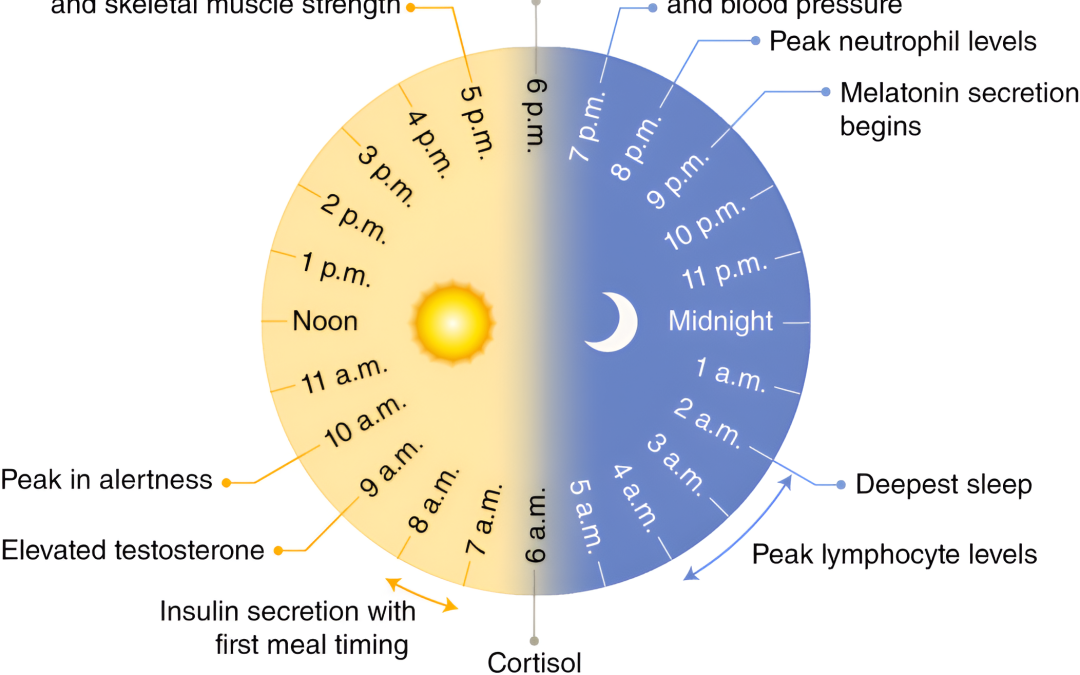
- When hormones like cortisol (stress hormone) or melatonin (sleep hormone) rise or fall
- Your body temperature
- How your brain works at different times of day
Circadian rhythms are found in almost every living thing, including plants, animals, and even fungi. For example, flowers open and close at certain times of day, and animals may become active or sleepy depending on the hour.
The Science Behind Circadian Rhythms
Circadian rhythms are controlled by a group of cells in your brain called the suprachiasmatic nucleus (SCN). This group sits in a part of the brain called the hypothalamus. The SCN acts like a master clock. It receives signals from your eyes about light and darkness, then sends messages to other parts of your body.
Here’s how the process works step by step:
- Light enters your eyes, sending signals to the SCN.
- The SCN uses this information to know if it is day or night.
- The SCN sends signals to other parts of the brain and body.
- These signals help control things like body temperature, hormone levels, and sleepiness.
The SCN keeps everything in sync. But each cell in your body also has its own small clock. These small clocks get their timing from the master SCN clock.
The Role Of Melatonin
Melatonin is a hormone released by a tiny gland in the brain called the pineal gland. When it gets dark, the SCN tells the pineal gland to produce melatonin, which makes you feel sleepy. When it is light, melatonin levels drop, and you feel more awake.
The Role Of Cortisol
Cortisol is often called the “stress hormone,” but it is also part of your daily rhythm. Cortisol is usually highest in the morning, helping you wake up and be alert. It drops during the day and is lowest at night.
Why Are Circadian Rhythms Important?
Most people think of circadian rhythms only when they feel jet lag or have trouble sleeping. But these rhythms are important for many reasons:
- Mental Health: Disrupted rhythms can increase the risk of depression or anxiety.
- Physical Health: Poor rhythms are linked to diabetes, heart disease, obesity, and even some cancers.
- Performance: Your attention, memory, and reaction speed change with your body clock.
- Immune System: Your ability to fight germs and heal is stronger at some times of day.
People often ignore these rhythms, but doing so can lead to health problems and poor performance at work or school.
How Do Circadian Rhythms Affect Sleep?
Sleep is the most well-known part of circadian rhythms. Your body wants to sleep and wake at certain times each day. If you go against this clock, you may find it hard to fall asleep or wake up, feel tired during the day, or even develop sleep disorders.
The Sleep-wake Cycle
Your sleep-wake cycle is controlled by two main systems:
- Circadian rhythm: Tells your body when to feel sleepy or awake.
- Sleep drive (homeostatic sleep pressure): The longer you stay awake, the sleepier you get.
When both systems work together, you fall asleep easily at night and wake up refreshed in the morning.
Common Sleep Problems
If your circadian rhythm is out of sync, you may have:
- Insomnia: Trouble falling or staying asleep
- Delayed sleep phase disorder: Feeling sleepy very late and waking up late
- Shift work disorder: Trouble sleeping because of working at night or changing shifts
- Jet lag: Feeling tired after traveling across time zones
Credit: sleepsolutions.health
Factors That Influence Circadian Rhythms
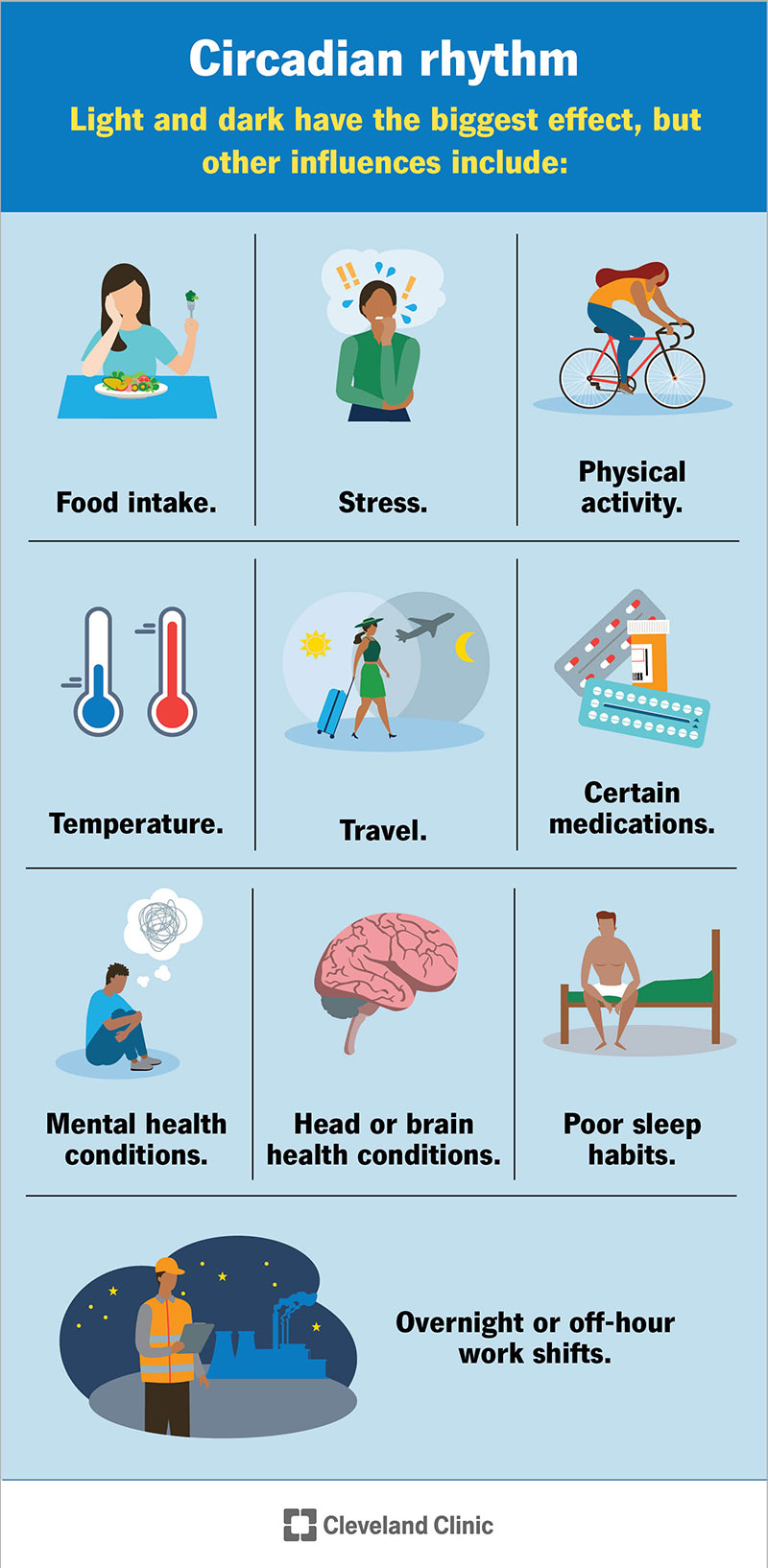
Circadian rhythms are natural, but many things can change or disrupt them. Some factors are under your control, while others are not.
Light Exposure
Light is the strongest factor. Sunlight in the morning helps set your clock and tells your body it is time to be awake. Bright screens at night (phones, TVs) can trick your brain into thinking it is daytime, making it hard to sleep.
Age
Your body clock changes as you get older. Teenagers often feel sleepy later at night and wake up later in the morning. Older adults tend to feel sleepy earlier and wake up earlier.
Work And Social Schedules
Shift work, long hours, or social events at night can push your rhythms out of sync. The more you change your sleep times, the harder it is for your body to adjust.
Travel
Traveling across time zones causes jet lag. Your internal clock is still set to your old time zone, so you feel sleepy or hungry at the wrong times.
Other Factors
- Caffeine and alcohol: Can change sleep quality and timing
- Medications: Some drugs affect melatonin or other hormones
- Illness: Some diseases can change your rhythms
Circadian Rhythms And Health
Circadian rhythms do much more than control sleep. They influence almost every part of your health.
Metabolism And Weight
Your body uses circadian rhythms to manage metabolism—how you turn food into energy. Eating at odd hours can confuse your body, leading to weight gain, diabetes, or high cholesterol.
Heart Health
Blood pressure and heart rate follow daily rhythms. People are more likely to have heart attacks or strokes at certain times of day, often in the early morning when blood pressure rises.
Mental Performance
Your brain is sharper and faster at some times than others. Most people think better in the late morning or early afternoon and are slower late at night.
Immune System
Your ability to fight infection is not the same all day. Some vaccines or medicines work better if given at certain times.
Mood And Mental Health
People with disrupted rhythms are at higher risk for depression, anxiety, and bipolar disorder. Getting good light in the morning and keeping a regular schedule can help mental health.
Common Circadian Rhythm Disorders
Disorders happen when your internal clock is not in sync with the outside world.
- Delayed Sleep Phase Disorder (DSPD): People cannot fall asleep until very late (often after midnight) and want to wake up late.
- Advanced Sleep Phase Disorder (ASPD): People get sleepy very early in the evening and wake up too early in the morning.
- Non-24-Hour Sleep-Wake Disorder: The sleep-wake cycle is longer than 24 hours, often seen in people who are blind.
- Shift Work Disorder: Problems sleeping due to working at night or rotating shifts.
- Jet Lag Disorder: Trouble adjusting to a new time zone after travel.
Symptoms Of Circadian Disorders
- Trouble falling asleep or waking up
- Daytime sleepiness
- Poor concentration
- Mood changes (irritability, depression)
- Poor work or school performance
How To Keep Your Circadian Rhythms Healthy
Staying in sync with your internal clock can help you feel better, work better, and avoid health problems. Here are practical steps:
Get Morning Sunlight
Spend 20–30 minutes outside in the morning. Sunlight is the most powerful way to reset your clock.
Keep A Regular Schedule
Go to bed and wake up at the same time every day, even on weekends. This trains your body clock.
Limit Bright Light At Night
Avoid screens and bright lights 1–2 hours before bed. Use dim lights in the evening.
Be Careful With Caffeine And Alcohol
Avoid caffeine in the late afternoon and evening. Alcohol may make you sleepy, but it disrupts sleep quality.
Exercise At The Right Time
Exercise in the morning or afternoon is best for your clock. Late-night exercise can make falling asleep harder.
Eat At Regular Times
Try to eat meals at the same times each day. Avoid large meals late at night.
Short Naps Only
If you nap during the day, keep it short (20–30 minutes). Long naps can disrupt your sleep cycle.
Use Light Therapy If Needed
For some people, a special light box can help reset their rhythms, especially in winter or for shift workers.
Circadian Rhythms Across The Lifespan
Circadian rhythms change as we age. Here’s how different groups are affected:
Babies And Children
Newborns have no set circadian rhythm. By 3–6 months, babies start to develop regular sleep and wake times.
Teenagers
Teens often have a delayed sleep phase, meaning they feel sleepy later and wake up later. This is normal but can clash with early school times.
Adults
Most adults have a stable rhythm, but stress, work, or family life can cause problems.
Older Adults
Rhythms shift earlier. Many older people feel sleepy in the early evening and wake up early. They may also sleep less deeply.
Chronotypes: Are You A Morning Or Evening Person?
Not everyone has the same body clock. Your chronotype is your natural tendency to sleep and wake at certain times. There are three main types:
- Morning types (“larks”): Wake up early, feel most energetic in the morning.
- Evening types (“owls”): Stay up late, feel best in the evening.
- Intermediate types: Fall somewhere in the middle.
Knowing your chronotype can help you plan work and study for your best times.
Chronotype And Performance
People do better at tasks when they match their activity to their chronotype. For example, morning people may do better on exams held early in the day, while night owls may perform better at night.
Real-life Examples Of Circadian Rhythm Disruption
Many people’s daily lives put them at risk for circadian rhythm problems. Some real examples:
- Shift workers (nurses, security guards, factory workers): Often must sleep during the day and work at night. This can cause chronic fatigue, poor health, and even higher rates of some diseases.
- Students: Often stay up late to study or use electronics, then wake early for school, leading to sleep debt and poor performance.
- Frequent travelers: Crossing time zones often leads to jet lag, digestive problems, and mood swings.
Circadian Rhythms In Animals And Plants
Humans are not the only ones with circadian rhythms. Most living things follow daily cycles.
Animals
- Nocturnal animals (like owls, bats): Active at night, sleep during the day.
- Diurnal animals (like humans, dogs): Active during the day, sleep at night.
- Some animals change their rhythms with the seasons. For example, birds may migrate or breed at certain times of year, linked to changes in daylight.
Plants
Plants open their flowers, move their leaves, and even make food using circadian rhythms. For example, sunflowers follow the sun during the day and reset at night.
Data: Effects Of Circadian Rhythm Disruption
Below you’ll find a comparison of health outcomes in people with regular versus disrupted circadian rhythms.
| Health Outcome | Regular Circadian Rhythm | Disrupted Circadian Rhythm |
|---|---|---|
| Sleep Quality | High | Low |
| Risk of Obesity | Lower | Higher |
| Mood Stability | Stable | Unstable |
| Cognitive Performance | Optimal | Reduced |
| Immune Function | Strong | Weaker |
Technologies And Tools For Circadian Health
Modern science offers several tools to help keep your rhythms in sync or fix problems.
Light Therapy
Special lamps (light boxes) can help people who do not get enough morning light, such as those with seasonal affective disorder or shift workers. These lamps are very bright and designed to mimic natural sunlight.
Sleep Tracking Devices
Wearable devices and phone apps can track your sleep and help you see patterns. They can tell you when you fall asleep, how much deep sleep you get, and when you wake up.
Smart Lighting
Some modern lights can change brightness and color to match the time of day, helping your body know when it is time to be awake or sleepy.
Credit: my.clevelandclinic.org
Comparison: Morning Vs. Evening Chronotypes
Here is a comparison of typical characteristics and challenges for morning and evening types.
| Feature | Morning Type | Evening Type |
|---|---|---|
| Peak Alertness | Early morning | Late afternoon/evening |
| Preferred Bedtime | 9–11 pm | Midnight–2 am |
| Preferred Wake Time | 5–7 am | 9–11 am |
| Common Problems | Difficulty staying awake late | Difficulty waking up early |
| Best Work/Study Time | Morning | Evening |
Two Insights Beginners Often Miss
Most people know that light affects sleep, but they often miss these points:
- Timing of Food Matters: When you eat can shift your circadian rhythm. Eating late at night can make you feel sleepy later and may cause weight gain. Try to have your last meal 2–3 hours before bedtime.
- Weekend Sleep-ins Disrupt Rhythms: Sleeping much later on weekends can confuse your body clock, making Monday mornings harder. It’s better to keep wake and sleep times within one hour of your usual schedule, even on weekends.

Credit: www.nature.com
What Happens When Your Circadian Rhythm Is Out Of Sync?
If your circadian rhythm does not match the outside world, you may feel tired, moody, or sick. Long-term disruption can cause serious health problems. Studies show that shift workers have higher risks for diabetes, heart disease, and even some cancers.
Students who stay up late often have worse grades and more anxiety.
But the good news is that your body clock can adapt. With good habits and sometimes medical help, most people can improve their rhythms.
Circadian Rhythms And Modern Life
Modern life often pulls us away from our natural rhythms. Artificial light, screen time, irregular work hours, and travel can all disrupt the clock inside us. Some experts believe that many health problems today are linked to ignoring our body clocks.
But with some simple steps—morning light, regular sleep, and smart choices—you can protect your circadian rhythm. This will help you sleep better, think better, and feel healthier every day.
If you want to learn more about the science of circadian rhythms, check out this Wikipedia article on circadian rhythms.
Frequently Asked Questions
What Are Circadian Rhythms In Simple Words?
Circadian rhythms are natural cycles in your body that repeat every 24 hours. They control when you feel sleepy or awake, when you eat, and other daily body functions. They are like your body’s built-in clock.
How Do I Know If My Circadian Rhythm Is Off?
If you often feel tired during the day, have trouble sleeping at night, or feel moody and unfocused, your circadian rhythm may be out of sync. Changes in sleep or eating times, travel, or shift work can cause this.
Can I Reset My Circadian Rhythm?
Yes. You can reset your rhythm by getting bright sunlight in the morning, keeping regular sleep and wake times, and avoiding screens and bright lights at night. For bigger problems, a doctor may suggest light therapy or other treatments.
Does Everyone Have The Same Circadian Rhythm?
No. Some people are naturally early risers (“morning people”), while others feel best late at night (“night owls”). This is called your chronotype. Age, genetics, and lifestyle all affect your rhythm.
Are Circadian Rhythms Only About Sleep?
No. They affect many things, including your mood, hormones, body temperature, and even how well you fight off sickness. Keeping your rhythms healthy helps your whole body work better.
Taking care of your circadian rhythm is one of the simplest, most powerful ways to improve your health and quality of life. By working with your body’s natural clock, you can feel more awake, think more clearly, and enjoy better health every day.
Comments
Post a Comment