Life inside your cells is always moving and changing. Every moment, your body needs energy to walk, think, and even breathe. Deep inside each cell, there are tiny parts called mitochondria. These are often called the “powerhouses” of the cell because they make the energy that keeps you alive. But what happens when these mitochondria get old or damaged? Your cells have a smart cleaning process called mitophagy. This process removes broken mitochondria, helping your body stay healthy and work well. Mitophagy is critical—not only for cell energy, but also for fighting diseases and aging.
Many people have never heard of mitophagy, yet it’s working inside them every day. Problems with mitophagy can lead to serious illnesses like Parkinson’s disease, heart problems, and even cancer. Scientists are learning more about this process and how it connects to health, disease, and even how long we live.
Understanding mitophagy is not just for scientists—anyone interested in health, aging, or disease prevention can benefit.
Let’s explore what mitophagy really is, why it matters, how it works, and what happens when it goes wrong. We’ll also cover how it is studied, its role in disease, and what you can do to help your mitochondria stay healthy.
What Is Mitophagy?
Mitophagy is a special type of autophagy, which means “self-eating” in Greek. Autophagy is how cells clean out parts they don’t need anymore. Mitophagy focuses only on mitochondria. When mitochondria are damaged or not working well, the cell can remove and recycle them through mitophagy. This keeps the cell’s energy supply strong and prevents dangerous problems.
Mitophagy is not random. It happens in a controlled way. When a mitochondrion is old or broken, signals inside the cell tell it to get ready for removal. The cell then wraps the damaged mitochondrion in a double-membrane bag called an autophagosome. This bag joins with another part called a lysosome. The lysosome is full of enzymes that break down and digest the mitochondrion, turning it into small parts the cell can reuse.
Why Do Cells Need Mitophagy?
Cells need energy to survive, and healthy mitochondria are key. But over time, mitochondria can get damaged by stress, toxins, or just normal use. Damaged mitochondria can leak harmful molecules called reactive oxygen species (ROS). These molecules can hurt the cell and even damage DNA. By removing damaged mitochondria, mitophagy protects cells from these dangers.
Without mitophagy, cells would fill up with broken power plants. This would slow down energy production and increase the risk of disease. In simple terms, mitophagy is the cell’s quality-control system for energy.
Mitophagy Vs. Autophagy
While both mitophagy and autophagy remove unwanted parts, they are not the same. Autophagy can remove many things, like old proteins, bacteria, or cell parts. Mitophagy is focused only on mitochondria. This special focus is important because mitochondria are so vital for cell health.
How Does Mitophagy Work? The Steps Explained
Mitophagy is a step-by-step process. Each step is controlled by signals and special proteins. Here’s how it usually happens:
- Damage Detection: The cell notices that a mitochondrion is not working well. This can happen because of low energy, too much ROS, or changes in the mitochondrion’s membrane.
- Tagging the Mitochondrion: Special proteins attach themselves to the damaged mitochondrion. One well-known pathway uses two proteins: PINK1 and Parkin.
- Autophagosome Formation: The cell builds a double-membrane bag (the autophagosome) around the mitochondrion.
- Lysosome Fusion: The autophagosome merges with a lysosome, which contains enzymes that break down cell parts.
- Digestion and Recycling: The mitochondrion is digested. Its building blocks (like amino acids and fats) are recycled by the cell.
Key Proteins In Mitophagy
Many proteins help control mitophagy. The most studied are:
- PINK1: This protein sticks to the surface of damaged mitochondria.
- Parkin: This protein is attracted by PINK1 and helps tag the mitochondrion for removal.
- BNIP3 and NIX: These proteins help mitophagy in cells under stress, like heart muscle cells.
- FUNDC1: Another protein that helps mitophagy during low oxygen.
If these proteins don’t work well, mitophagy may fail. This can lead to disease.
The Pink1/parkin Pathway
This is the best-known way cells carry out mitophagy. Normally, PINK1 is quickly broken down in healthy mitochondria. But when mitochondria are damaged, PINK1 builds up on their surface. It then attracts Parkin, which attaches “tags” (ubiquitin) to the mitochondrion.
These tags signal the cell to form an autophagosome around the mitochondrion and remove it.
Selective Vs. Non-selective Mitophagy
Mitophagy can be selective (removing only damaged mitochondria) or non-selective (removing many mitochondria at once, like during starvation). Selective mitophagy is much safer for the cell, as it keeps only the healthiest mitochondria.
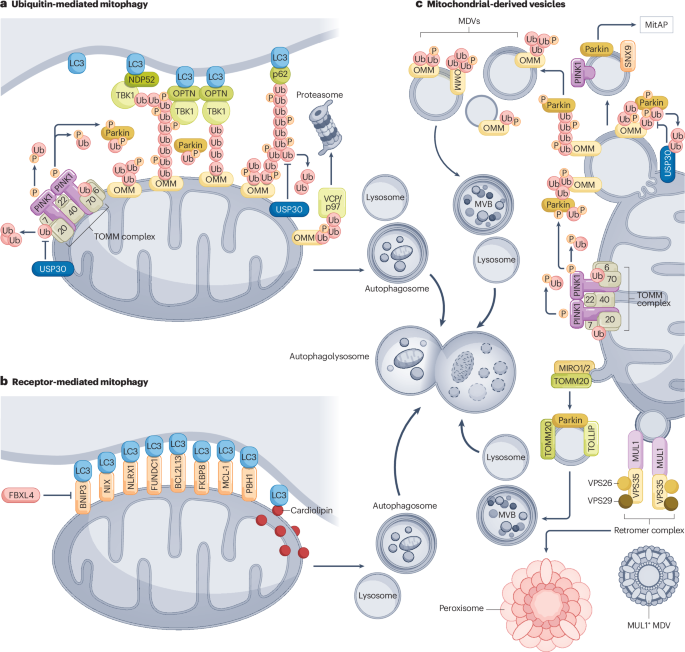
Credit: www.nature.com
Why Is Mitophagy Important For Health?
Mitophagy is not just about cleaning. It has a big impact on health and disease. When mitophagy works well, cells stay healthy and energetic. When it fails, problems can start.
Energy And Aging
As we age, mitochondria get less efficient. Damaged mitochondria build up, and energy drops. This can lead to muscle weakness, tiredness, and slower thinking. Good mitophagy helps clear out these old mitochondria, keeping cells young and active.
Protection From Disease
Faulty mitophagy is linked to many diseases. For example, in Parkinson’s disease, problems with PINK1 and Parkin can cause brain cells to die. In heart disease, poor mitophagy can make heart muscle weak. Even cancer cells can use mitophagy to survive in tough conditions.
Stress Resistance
Cells often face stress, like lack of oxygen or toxins. Mitophagy helps cells survive by removing mitochondria that are making too much ROS. This protects the cell’s DNA and other parts from damage.
Immune System Role
Mitophagy also helps the immune system. When bacteria or viruses damage mitochondria, mitophagy clears them away. This reduces inflammation and helps fight infection.
What Happens When Mitophagy Fails?
When mitophagy does not work well, cells start to suffer. Damaged mitochondria build up and cause problems.
Disease Examples
- Parkinson’s Disease: Loss of mitophagy leads to dying brain cells and movement problems.
- Heart Disease: Weak mitophagy makes the heart less able to handle stress, leading to heart failure.
- Liver Diseases: Poor mitophagy can lead to fatty liver and cirrhosis.
- Cancer: Some cancer cells reduce mitophagy to avoid cell death, while others increase it to survive treatments.
Signs Of Poor Mitophagy
People with poor mitophagy may have tiredness, muscle pain, memory loss, or signs of early aging. However, these signs can have many causes, so mitophagy is often not checked directly.
How Cells Try To Compensate
Sometimes, cells increase general autophagy to compensate. But this does not work as well as mitophagy. Over time, cell damage builds up and leads to disease.
Mitophagy In Aging And Longevity
Aging is closely linked to changes in mitophagy. As you get older, mitophagy becomes less efficient. This is one reason why older people lose muscle, get tired easily, or develop age-related diseases.
Animal Studies
Research in animals like worms, flies, and mice shows that increasing mitophagy can extend lifespan. For example, some worms with higher mitophagy live up to 50% longer. Mice with stronger mitophagy in heart or brain cells are protected from age-related decline.
Human Data
Humans with gene changes that improve mitophagy may age more slowly. Some long-lived people have more active mitophagy genes. However, more research is needed to be sure.
Can We Boost Mitophagy To Live Longer?
Some scientists believe that boosting mitophagy could fight aging. Certain diets, exercises, or drugs may improve mitophagy. However, there is no simple way to do this yet.
Mitophagy And Disease: Key Connections
Mitophagy is linked to many diseases. Here are some important examples:
Neurodegenerative Diseases
- Parkinson’s Disease: Patients often have gene mutations that block PINK1/Parkin mitophagy.
- Alzheimer’s Disease: Damaged mitochondria and poor mitophagy are seen in patient brains.
- ALS (Amyotrophic Lateral Sclerosis): Poor mitophagy in nerve cells leads to faster disease.
Heart Diseases
- Heart Failure: Weak mitophagy makes heart cells die under stress.
- Ischemia-Reperfusion Injury: When blood returns to the heart after a blockage, damaged mitochondria can hurt the heart. Mitophagy protects against this.
Metabolic Diseases
- Type 2 Diabetes: Poor mitophagy makes cells less sensitive to insulin.
- Fatty Liver Disease: Damaged mitochondria in liver cells cause fat buildup.
Cancer
Cancer cells can use mitophagy to survive tough conditions. In some cases, blocking mitophagy can help kill cancer cells. In other cases, boosting mitophagy may prevent cancer by cleaning out damaged mitochondria before they cause mutations.
Infection And Immunity
Some bacteria try to block mitophagy to survive inside cells. The immune system uses mitophagy to fight these invaders.
How Do Scientists Study Mitophagy?
Studying mitophagy is challenging because it happens inside living cells. Scientists use several tools to see and measure mitophagy.
Microscopy
Special dyes and microscopes can show when mitochondria are being digested. For example, dyes that change color in acid (like inside lysosomes) can label mitochondria.
Genetic Models
Scientists can create mice, flies, or worms with mutated mitophagy genes. Watching what happens to these animals gives clues about mitophagy’s role in health and disease.
Biochemical Tests
Researchers measure the levels of proteins like PINK1, Parkin, or LC3 (an autophagy marker) to estimate mitophagy.
Imaging In Live Animals
New imaging methods allow scientists to see mitophagy in live animals, not just in test tubes.
Advantages And Limits
- Microscopy is direct but slow.
- Genetic models show real effects but are expensive.
- Biochemical tests are quick but less detailed.
Example Data Table: Mitophagy Detection Methods
| Method | What It Measures | Advantages | Limits |
|---|---|---|---|
| Microscopy with dyes | Visual digestion of mitochondria | Direct, clear images | Time-consuming |
| Genetic models | Effects of gene changes | Shows real outcomes | Expensive, slow |
| Protein markers (western blot) | Levels of key proteins | Fast, easy | Less specific |
Can You Boost Mitophagy? Practical Tips
Many people want to know if they can improve mitophagy for better health or aging. While there is no magic solution, some habits may help.
Exercise
Regular exercise, especially intense or interval training, can boost mitophagy. Exercise stresses mitochondria in a healthy way, signaling the body to clear out the weak ones.
Fasting And Diet
Short-term fasting or calorie restriction can increase mitophagy. This is because the body needs to use energy more efficiently during fasting, and old mitochondria are removed.
Diets high in processed foods and sugar may block mitophagy, while natural whole foods support it.
Sleep
Poor sleep reduces mitophagy. Good sleep helps the body repair and remove damaged mitochondria.
Avoiding Toxins
Smoking, pollution, and some drugs can damage mitochondria. Reducing exposure helps keep mitophagy working well.
Supplements And Drugs
Some research shows that substances like resveratrol (from red grapes), urolithin A (from pomegranates), or certain prescription drugs may boost mitophagy. However, most studies are in animals, not humans.
Table: Activities That Affect Mitophagy
| Activity | Effect on Mitophagy | Notes |
|---|---|---|
| Exercise | Boosts | All ages benefit |
| Fasting | Boosts | Short-term is best |
| Processed food diet | Reduces | Linked to poor health |
| Smoking | Reduces | Damages mitochondria directly |
| Resveratrol | May boost | Still experimental |
Two Non-obvious Insights
- Mitochondria Talk to the Nucleus: Mitochondria can send signals to the cell’s control center (the nucleus) to ask for help or more mitophagy. This “conversation” is key for cell health.
- Mitophagy Varies by Organ: Not all organs need the same amount of mitophagy. For example, your heart and brain need very active mitophagy, while fat tissue needs less. This is why some diseases affect only certain organs.

Credit: www.sciencedirect.com
Current Research And Future Directions
Mitophagy is a fast-growing field. Many new discoveries are changing how we understand aging and disease.
Drug Development
Companies are trying to make drugs that can safely boost mitophagy in humans. Early trials are looking at drugs for Parkinson’s disease, heart failure, and fatty liver.
Personalized Medicine
In the future, doctors may test your mitophagy levels and give you treatments based on your genes and lifestyle.
Anti-aging Research
Some anti-aging companies are focusing on mitophagy as a way to slow aging and improve healthspan (the years you live in good health).
Cancer Therapy
Researchers are studying how to block mitophagy in cancer cells to make treatments more effective.
Example Data Table: Diseases Linked To Mitophagy
| Disease | Mitophagy Status | Key Genes Involved |
|---|---|---|
| Parkinson’s Disease | Reduced | PINK1, Parkin |
| Heart Failure | Reduced | BNIP3, NIX |
| Type 2 Diabetes | Reduced | FUNDC1 |
| Cancer | Variable | Multiple |
Challenges Ahead
- Measuring mitophagy in humans is still hard. Most tests are in animals or cells.
- Boosting mitophagy too much could be risky. Cells need a balance—not too much, not too little.
- More research is needed to find safe ways to control mitophagy.
For deeper reading, you can check the Wikipedia page on Mitophagy.
Frequently Asked Questions
What Is The Difference Between Mitophagy And Autophagy?
Mitophagy is the removal of damaged mitochondria, while autophagy is the broader process that removes many types of cell waste, like proteins, bacteria, or old cell parts. Mitophagy is a special form of autophagy focused only on mitochondria.
Can I Improve Mitophagy Naturally?
Yes, some habits like regular exercise, short-term fasting, eating whole foods, and getting good sleep can help support healthy mitophagy. Avoiding toxins like cigarettes and pollution is also important.
Why Is Mitophagy Important For Aging?
Mitophagy removes old or damaged mitochondria, which helps keep cells young and energetic. As you age, mitophagy slows down, leading to more cell damage, muscle loss, and higher disease risk.
Is Poor Mitophagy Linked To Diseases?
Yes, problems with mitophagy are linked to many diseases, such as Parkinson’s, Alzheimer’s, heart failure, type 2 diabetes, and some cancers. Keeping mitophagy healthy is key for preventing these problems.
Are There Any Drugs That Boost Mitophagy?
Some drugs and supplements are being studied for their effects on mitophagy, but most are still experimental. Examples include resveratrol, urolithin A, and certain diabetes drugs. Always talk to a doctor before trying new treatments.
Mitophagy is one of the most important cleaning systems in your cells. It is still being studied, but it is clear that keeping this process healthy is crucial for energy, aging, and disease prevention. By understanding mitophagy, you can make smarter choices for your health and keep your body’s powerhouses working at their best.

Credit: www.cell.com
Comments
Post a Comment