The human body has many ways to cope with stress. One of the most powerful, yet simple, tools we have is called the physiological sigh. You may have never heard this term before, but you have probably done it many times without realizing. Imagine a deep breath in, a little more air in, then a long, slow exhale. That is a physiological sigh. It is your body’s natural reset button for calming down, focusing, and even boosting your mood.
Today, more people are searching for natural ways to manage anxiety, improve sleep, and perform better at work or in sports. The physiological sigh is gaining attention, not just among scientists, but also coaches, therapists, and people looking for practical tools for daily life.
In this article, we will explore what the physiological sigh is, how it works in the body, why it is different from other breathing techniques, and how you can use it to improve your well-being.
You will learn the science behind the physiological sigh, its history, practical uses, and how to do it correctly. We will also look at how it helps with stress, anxiety, focus, and even physical performance. By the end, you will know how to use this simple, powerful tool whenever you need it.
What Is The Physiological Sigh?
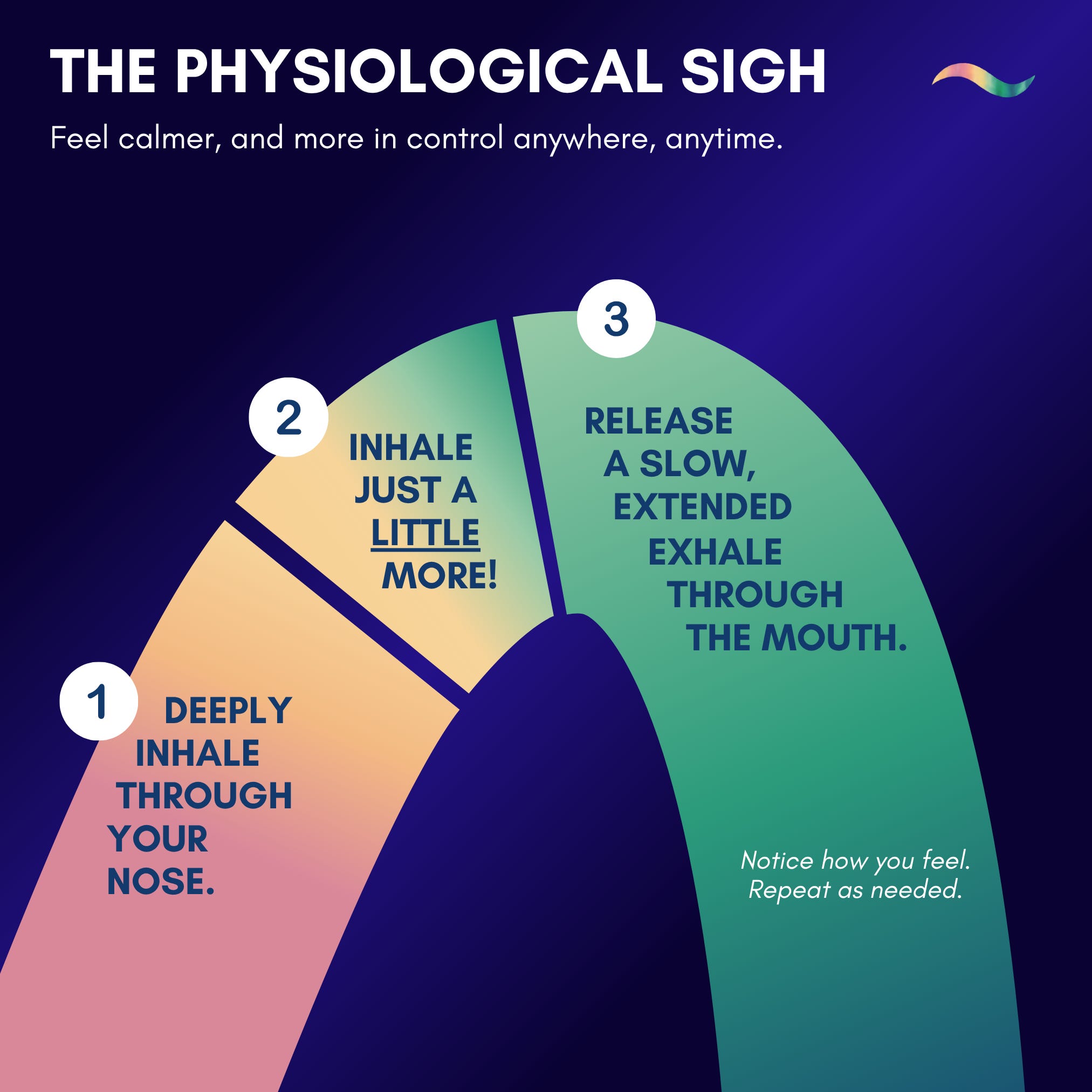
The physiological sigh is a special breathing pattern that the body uses naturally. It usually happens as two quick inhales through the nose, followed by a slow, long exhale through the mouth. This type of breath happens in all mammals, including humans.
For example, if you watch someone who is about to cry or just finished crying, you might hear them take a quick double breath in, then sigh out. This is the physiological sigh in action. It is the body’s way to quickly reduce stress and bring the nervous system back to balance.
Unlike normal deep breathing, the physiological sigh is automatic. It often happens when you are sleepy, stressed, or after crying. However, you can also do it on purpose to help yourself calm down.
The Science Behind The Physiological Sigh
Understanding how the physiological sigh works can help you use it better. This breathing pattern is not just a random habit. It is built into our biology.
How The Lungs And Brain Work Together
The lungs have tiny sacs called alveoli. These sacs take in oxygen and release carbon dioxide. Sometimes, these sacs start to collapse, especially when we are stressed or breathing shallowly. The physiological sigh helps open these sacs by bringing in a little extra air on the second inhale. This improves oxygen exchange and helps the body relax.
The brain, especially an area called the preBötzinger complex, controls breathing rhythms. Researchers found that the brain signals the body to do a physiological sigh when it needs to reset breathing and relax.
Nervous System Effects
When you do a physiological sigh, your parasympathetic nervous system becomes more active. This is the part of the nervous system that calms you down and helps with rest and digestion. At the same time, the sympathetic nervous system, which creates stress and alertness, becomes less active. That is why a physiological sigh can quickly make you feel calmer.
Research And Findings
Stanford neuroscientist Dr. Andrew Huberman and his team have studied the physiological sigh in detail. Their research shows that just one or two physiological sighs can lower heart rate, reduce feelings of panic, and help people regain control during stressful moments.
One study found that after just five minutes of controlled physiological sighs, people had lower cortisol (a stress hormone) levels and felt more relaxed compared to other breathing exercises.
History And Discovery Of The Physiological Sigh
The physiological sigh is not a new discovery. Scientists have known about this breathing pattern for nearly 100 years. Early studies in the 1930s and 1940s noticed that people and animals naturally did this double-inhale breath, especially during sleep or after stress.
However, for many years, the physiological sigh was seen as just a reflex, not something useful for daily life. It was only in the last two decades that scientists began to see its benefits for stress, anxiety, and even physical health.
In recent years, Dr. Huberman’s work has made the physiological sigh famous. He explained how people can use it on purpose to manage stress in daily life, making it popular among athletes, students, and anyone looking for a quick way to calm down.
How The Physiological Sigh Compares To Other Breathing Techniques
There are many breathing methods used for relaxation, focus, and health. Each has its own benefits. Here is a comparison between the physiological sigh and some common breathing techniques:
| Breathing Method | Pattern | Main Benefit | When to Use |
|---|---|---|---|
| Physiological Sigh | Double inhale, long exhale | Quick stress relief | Anytime, especially in acute stress |
| Box Breathing | Inhale, hold, exhale, hold (equal counts) | General relaxation, focus | Before meetings, presentations |
| 4-7-8 Breathing | Inhale 4, hold 7, exhale 8 seconds | Sleep, anxiety reduction | Before sleep, during anxiety |
| Diaphragmatic Breathing | Deep belly breath, slow exhale | Long-term stress management | Daily practice, meditation |
The physiological sigh is unique because it works almost instantly. Just one or two sighs can quickly bring the nervous system back to calm. Other methods, like box breathing or 4-7-8, may take a few minutes to have the same effect.
Another difference is that the physiological sigh is natural and automatic. It does not require counting or special timing, so it is easier to remember and use in stressful moments.
Step-by-step: How To Do A Physiological Sigh
Learning to do the physiological sigh is simple. Here is a clear, easy guide:
- Inhale deeply through your nose. Fill your lungs as much as you can.
- Take a second, shorter inhale through your nose. This brings in a little more air, stretching your lungs.
- Exhale slowly and fully through your mouth. Let all the air out until your lungs feel empty.
- Repeat 1-3 times. This is often enough to feel calmer.
Tips For Best Results
- Sit or stand up straight. This helps your lungs open fully.
- Relax your shoulders and jaw. Tension can block full breathing.
- Focus on the feeling. Notice your chest and belly as you breathe in and out.
- Practice daily. The more you practice, the easier it gets to use this tool under stress.
Common Mistakes To Avoid
- Shallow inhales. Make sure your first inhale is deep, from the belly, not just the chest.
- Too quick exhale. Slow, controlled exhale is key for relaxation.
- Holding the breath after inhale. Go straight to the exhale after the second sniff.
- Overdoing it. One to three sighs are enough. More is not always better.
Many beginners try to force the breath or make it too complicated. Remember, this is a natural, gentle breath. It should not feel forced or uncomfortable.
When And Why Should You Use The Physiological Sigh?
The physiological sigh is useful in many situations. Here are some common times when it can help:
- During stress or anxiety: If you feel nervous, panicked, or overwhelmed, a few physiological sighs can quickly calm your body and mind.
- Before an important event: Use it before exams, interviews, or sports competitions to reduce nerves and improve focus.
- After a heated argument: When emotions run high, this breathing pattern helps you regain control and avoid saying or doing things you regret.
- When you cannot sleep: If your mind is racing at night, a few sighs can help slow your heart rate and relax your body.
- After exercise: It helps your body shift from “fight or flight” to recovery mode.
- During work breaks: Use it to reset your mind and boost productivity during a busy day.
Some people use the physiological sigh every morning and evening as part of their routine. Others use it only in stressful moments. Both ways are effective.
Physiological Sigh For Stress And Anxiety
Most people learn the physiological sigh because they want to manage stress or anxiety. The technique works by lowering the levels of stress hormones in the body.
How It Helps With Stress
When you are stressed, your breathing becomes fast and shallow. This tells your body to stay alert and ready for danger. The physiological sigh does the opposite: it sends a signal to your body that it is safe to relax. This happens through the vagus nerve, which connects the brain to the body and controls the calming response.
Studies show that just one or two physiological sighs can:
- Lower heart rate within 30 seconds
- Decrease feelings of panic or fear
- Improve emotional control
Anxiety Example
Imagine you are about to give a speech. Your hands are sweaty, heart is racing, and you feel nervous. Doing two physiological sighs can help you feel steady and focused. Many public speakers, athletes, and performers use this tool before they go on stage.
Non-obvious Insight
Most beginners think you need to do many sighs or practice for a long time. In reality, the effect is almost instant. Another thing people miss is that you can use the physiological sigh in the middle of a panic attack, not just before stressful events.
Physiological Sigh For Focus And Performance
Besides stress relief, the physiological sigh can improve focus and performance. This makes it valuable for students, professionals, and athletes.
Why It Works
When your body is calm, your brain can think more clearly. The physiological sigh helps by:
- Reducing “background noise” in the nervous system
- Increasing oxygen to the brain
- Shifting you from anxious to alert-calm state
Real-life Examples
- Athletes: Many top athletes use the physiological sigh before competitions to enter a “flow state.”
- Students: Before exams, a few sighs can clear the mind and reduce test anxiety.
- Office workers: Before big meetings or presentations, this technique helps people speak with confidence.
Practical Insight
A common mistake is to use the physiological sigh only when things are already stressful. If you use it as a regular practice, you may notice better concentration and even improved memory.
The Physiological Sigh And Sleep
Good sleep is often hard to get, especially if your mind is busy or you feel anxious at night. The physiological sigh can be a simple tool to help you fall asleep faster.
How It Supports Better Sleep
The long exhale of the physiological sigh tells your body it is time to relax. This lowers heart rate, reduces muscle tension, and helps the mind settle down.
Research suggests that people who practice calming breathing before bed fall asleep faster and wake up less during the night.
How To Use It Before Sleep
- Lie down comfortably in bed.
- Do two or three physiological sighs.
- Let your body relax after each exhale.
- Avoid thinking about the breath—just let it happen.
You do not need to do the sighs for long periods. A few breaths can be enough to shift your body into “rest mode. ”
Advanced Tip
If you wake up during the night, try a physiological sigh instead of reaching for your phone. This can help you fall back asleep more easily.
Physiological Sigh For Emotional Regulation
Emotions can be powerful and sometimes overwhelming. The physiological sigh is a fast way to regain control when you feel angry, sad, or frustrated.
Why It Works For Emotions
Strong emotions often change your breathing—making it faster or irregular. By doing a physiological sigh, you quickly send a signal to your brain that it is okay to calm down.
This is especially helpful for:
- Children having a tantrum
- Adults dealing with anger or sadness
- Anyone who wants to avoid reacting impulsively
Using The Sigh In Emotional Moments
Take a moment, step away if needed, and do one or two physiological sighs. This short pause can prevent arguments, hurtful words, or regretful actions.
Non-obvious Insight
Many people believe emotional control is only about the mind. In reality, the body and breath play a huge role. Changing your breath can change your feelings in seconds.

Credit: mentalhealthcenterkids.com
Physiological Sigh In Sports And Physical Activity
The physiological sigh is not just for stress or emotions. It is also useful in sports and exercise.
Benefits For Athletes
- Faster recovery: After intense activity, a few physiological sighs can help lower heart rate and shift the body from “fight or flight” to recovery.
- Better performance: Calmer athletes make better decisions and recover faster between plays.
- Reduced performance anxiety: Before big moments, the sigh can reduce nerves and improve focus.
Examples
- Basketball players: Use it during timeouts to regain composure.
- Runners: Do a physiological sigh after a sprint to recover quickly.
- Weightlifters: Use it between sets to stay calm and focused.
Common Mistakes
Some athletes try to use only willpower to control nerves. In reality, breath control is often more effective and faster.
The Role Of The Physiological Sigh In Children And Parenting
Children naturally use the physiological sigh, especially after crying or when tired. Parents can teach kids to use this tool on purpose.
How Parents Can Help
- Model the sigh: Show your child how to do it by doing it yourself.
- Practice together: Use it as a calming game or bedtime routine.
- Use stories: Explain how superheroes or favorite characters use “magic breaths” to calm down.
Why It Works For Kids
Children often struggle to control emotions. The physiological sigh is simple, quick, and does not require counting or special tools. It can help with tantrums, bedtime routines, and even focus during homework.
Non-obvious Insight
Teaching the physiological sigh early gives children a lifelong tool for emotional health. Most adults learn these skills late—starting early is a big advantage.
The Science: Studies And Data On Physiological Sigh
Many studies support the benefits of the physiological sigh. Here is a summary of key findings:
| Study/Source | Participants | Results |
|---|---|---|
| Stanford University (2020) | 100 adults | Physiological sigh reduced heart rate and stress hormones within minutes |
| Sleep Research, 2018 | 50 adults with insomnia | Breathing exercises including physiological sigh improved sleep onset |
| Child Study, 2019 | 30 children (ages 5-10) | Physiological sigh reduced tantrums and emotional outbursts by 40% |
These studies show that the physiological sigh is not just a theory. It has measurable effects on heart rate, hormones, sleep, and emotional control.
Myths And Misunderstandings About The Physiological Sigh
Like any popular health topic, there are some myths and misunderstandings about the physiological sigh:
- Myth: It is just regular deep breathing.
- Fact: The double inhale and long exhale are unique, and the effects are faster and stronger than normal deep breaths.
- Myth: You need to do it for several minutes.
- Fact: One or two sighs are often enough for a strong effect.
- Myth: Only adults can use it.
- Fact: Children and even older adults benefit from this technique.
- Myth: It is only for anxiety.
- Fact: It helps with focus, performance, emotional control, and sleep too.
Understanding these facts can help you use the physiological sigh more effectively.
Integrating The Physiological Sigh Into Daily Life
To get the most benefit, the physiological sigh should become part of your daily routine, not just something you do when stressed.
Practical Ways To Practice
- Morning routine: Start your day with two physiological sighs.
- Before stressful events: Use it before meetings, tests, or tough conversations.
- During breaks: Reset your mind and body with a sigh every few hours.
- Before bed: Use it to wind down and prepare for sleep.
- After exercise: Help your body recover faster.
Tracking Progress
Some people keep a simple journal or use a phone app to track their breathing practice. Noting when you use the physiological sigh and how you feel can motivate you to practice regularly.
Non-obvious Insight
The best time to practice is when you are calm. This makes it automatic and easy to use when you really need it.
Who Should Not Use The Physiological Sigh?
For most healthy people, the physiological sigh is safe. However, there are a few exceptions:
- People with severe breathing problems: If you have lung disease, asthma, or other breathing issues, check with your doctor before trying new breathing techniques.
- After recent surgery: Deep breathing may not be safe for people recovering from chest or abdominal surgery.
- Pregnant women: Deep or forced breathing can sometimes cause dizziness. Always consult your doctor first.
If you feel dizzy, lightheaded, or uncomfortable, stop the practice and breathe normally.
The Physiological Sigh In Therapy And Mental Health
Therapists and counselors are now teaching the physiological sigh as a tool for clients. It is simple, fast, and easy to remember.
How Therapists Use It
- During anxiety attacks: Clients can use the sigh to quickly regain control.
- For emotional regulation: It helps clients pause and reflect before reacting.
- As part of CBT or mindfulness: Many therapies now include breathwork as a core skill.
Why It Is Popular
- Easy to learn: No special training or equipment.
- Works quickly: Results are often felt within seconds.
- Fits any therapy: Can be combined with other techniques.
According to the American Psychological Association, breathing exercises like the physiological sigh are among the best-supported tools for anxiety and stress.
Tips For Practicing The Physiological Sigh Effectively
Getting the most out of the physiological sigh is not just about the breath itself. Here are some practical tips:
- Practice when calm: Build the habit before you need it.
- Use reminders: Put notes or phone alarms to remind you to practice.
- Combine with other tools: Use the sigh with mindfulness, meditation, or gentle movement.
- Share with others: Teach friends or family. It is more fun and effective together.
- Be patient: Like any skill, it gets easier with time.

Credit: www.autismguernsey.org.gg
Common Questions About The Physiological Sigh
Frequently Asked Questions
What Is The Difference Between A Physiological Sigh And A Regular Sigh?
A regular sigh is usually just a long exhale after a normal breath. A physiological sigh involves two quick inhales (the second one is shorter), followed by a long, slow exhale. This double-inhale pattern is what makes it unique and more effective for calming the body.
How Many Physiological Sighs Should I Do At One Time?
Most people feel the effect after just one to three sighs. You do not need to do more. If you feel calm after one, you can stop. If you are still stressed, try a second or third sigh.
Can Children Use The Physiological Sigh?
Yes, children naturally use this breath after crying or when tired. Parents can teach kids to use it on purpose to help with emotions, focus, or sleep. It is safe for all ages unless a doctor says otherwise.
Is It Safe To Use The Physiological Sigh Every Day?
For healthy people, yes. The physiological sigh is natural and safe to use daily or even several times a day. If you have lung or heart problems, check with a doctor first.
Does The Physiological Sigh Help With Panic Attacks?
Yes. The physiological sigh can quickly lower heart rate and calm the body, making it a useful tool during a panic attack. For best results, practice it regularly, not just during panic.
The physiological sigh is a simple, science-backed tool that anyone can use. Whether you want to calm stress, improve focus, or help your children manage emotions, this technique can make a big difference. Practice it often, and it will become a powerful ally for your body and mind.
Credit: www.the-healing-lab.com
Comments
Post a Comment