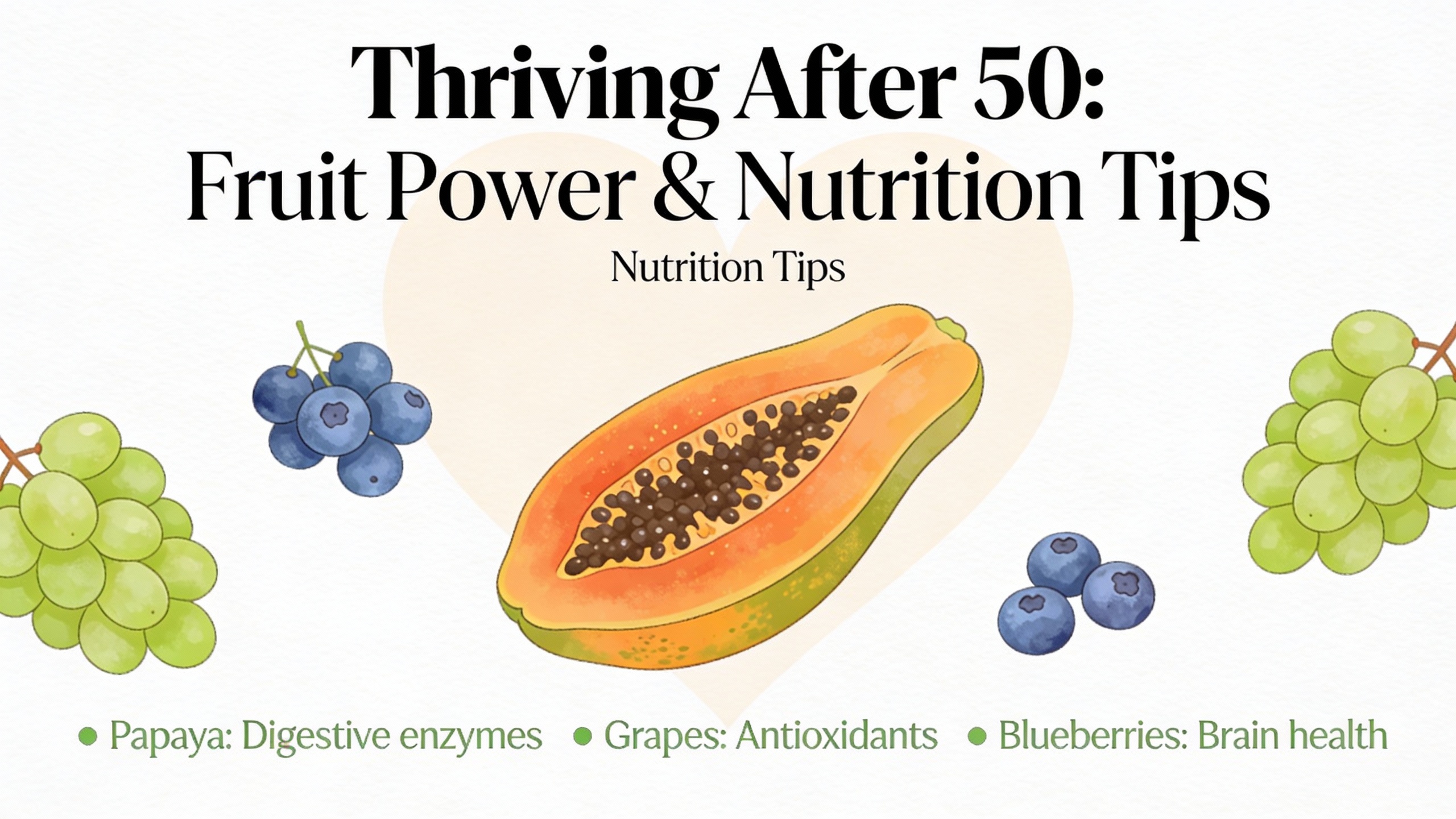
You probably noticed your metabolism, tastebuds, or joint creaks changing as you hit 50. I did too — I once swapped my afternoon candy bar for a bowl of papaya after a dentist visit and felt unexpectedly better in a week. This post strolls through 12 fruits you may not use enough, the nutrient checklist that matters after 50, and simple swaps you can actually stick with. Expect helpful numbers, real-life tips, and a surprising fruit that might become your new favorite.
Fruit power: 12 fruits that help you thrive (Whole Fruits)
When you focus on whole fruits, you get a simple mix of hydration, vitamins, and Fiber Goals support—without overthinking it. These 12 picks also bring key plant compounds where Antioxidants Help protect your cells and support Heart Health, especially after 50.
Quick rundowns (12 whole fruits)
- Papaya — Vitamin C + Vitamin A, plus the papain enzyme to aid digestion and may reduce inflammation; soft texture is easier if you have dental issues.
- Lemon — Vitamin C for immune and skin support; add to water/tea for hydration and a low-glycemic boost.
- Grapes — Antioxidants like resveratrol linked to Heart Health, healthy blood pressure, and brain support; easy grab-and-go.
- Pomegranate — Packed with punicalagins and anthocyanins for inflammation support, heart protection, and memory/brain benefits.
- Kiwi — Vitamin C, Vitamin K, and fiber; the actinidin enzyme supports digestion and may help blood pressure and cholesterol.
- Blueberries — Rich in anthocyanins; Antioxidants Help with brain function, heart risk, and healthy blood sugar.
- Apples — Fiber + Vitamin C for digestion and steadier blood sugar; also linked to bone and brain protection.
- Oranges — Vitamin C, fiber, and potassium; bioflavonoids support blood vessels and inflammation control.
- Raspberries — High fiber and antioxidants; ellagic acid is linked to anti-cancer properties and supports skin and heart.
- Plums — Vitamins A and C plus potassium and fiber; supports digestion, blood pressure, and bone health.
- Figs — Fiber, calcium, potassium, and magnesium for bone support; antioxidants may help reduce inflammation.
- Avocado — Monounsaturated fat for Heart Health, plus fiber; lutein and zeaxanthin support eye health, and the soft texture helps if chewing is tough.
Easy serving ideas you’ll actually use
- Papaya with yogurt
- Lemon in water or tea
- Grapes as an easy snack
- Pomegranate seeds on salads or yogurt
- Avocado on toast
Nutrient checklist: numbers you should know (Protein Intake, Fiber Daily, Vitamin B12, Calcium Intake)
After 50, making informed food choices helps you stay strong and energized. Healthy fruits can be a big part of that plan—supporting heart health, digestion, brain function, and inflammation control—while you also keep an eye on a few key nutrition numbers.
Protein Intake (and Protein Daily) targets
To help maintain muscle, aim for 0.5–0.9 grams per pound of body weight for your Protein Intake each day. The big tip: don’t “save” protein for dinner. Distribute protein across meals so your body can use it better.
- Protein Daily strategy: include protein at breakfast, lunch, and dinner.
- High-protein breakfast ideas: Greek yogurt with berries, eggs with fruit, or cottage cheese with sliced peaches.
Fiber Daily goals (fruit makes it easier)
Fiber Daily needs are about 22 g/day for women 51+ and 28 g/day for men 51+. Fiber from whole fruits (not juice) supports digestion and helps steady blood sugar.
- Raspberries: a fiber powerhouse for snacking or topping oatmeal.
- Apples: keep the skin on for more fiber.
- Figs: a sweet way to add fiber (fresh or dried—watch portions if dried).
Vitamin B12 and Calcium Intake (plus Vitamin D)
Your Vitamin B12 target is about 2.4 mcg/day. Some older adults may need a supplement if intake or absorption is low—ask your clinician if you’re unsure.
Calcium Intake matters for bone strength: women 50+ need 1,200 mg/day; men 51–70 need 1,000 mg/day, then 1,200 mg/day after 70. Pair calcium with Vitamin D: 600 IU/day (increasing to 800 IU after 70).
Two quick numbers people forget: sodium + hydration
- Sodium limit: 2,300 mg/day (or 1,500 mg if you have high blood pressure).
- Hydration: about 13 cups/day fluids for men 51+ and 9 cups/day for women (includes fluids from foods like fruit).
Practical swaps & recipes: making fruits work for you (Stay Hydrated, Whole Fruits)
After 50, the goal isn’t perfection—it’s informed choices that keep you feeling strong and steady. Fruits make that easier because each one brings a different mix of fiber, antioxidants, and helpful plant compounds. The trick is using them in ways that fit your routine, your budget, and your teeth—while keeping a Healthy Plate built around Plant Foods.
Easy swaps that add up (Whole Fruits)
- Dessert swap: trade cookies or ice cream for 1 cup blueberries or a bowl of delicate raspberries. You still get sweetness, plus fiber and antioxidants.
- Snack swap: replace salty chips with a handful of grapes (a lower-glycemic snack). You cut sodium and boost hydration and plant nutrients.
- Yogurt upgrade: add 1–2 tablespoons pomegranate seeds for crunch and a tart pop.
Stay Hydrated: make water taste better
If plain water feels boring, squeeze lemon into it. That small change improves palatability, so you sip more often—supporting your Stay Hydrated goal. Try it warm in the morning or iced in the afternoon.
Texture hacks (when chewing is hard)
Soft fruits can help you stick with fruit even with dental limits. Papaya has a soft, buttery texture, and banana blends smoothly—perfect for smoothies. Kiwi is tangy, so slicing it thin makes it easier to chew while keeping the bright flavor.
When I was in my “dentist-era,” I swapped a candy bar for chilled papaya cubes. It was sweet, soft, and it actually became a habit.
Simple day-by-day fruit ideas for a Healthy Plate
- Breakfast: lemon water + oatmeal topped with frozen berries (often cheaper and just as nutritious).
- Mid-morning: sliced kiwi with cottage cheese.
- Lunch: avocado salad—use 1/2 avocado (about 120–160 kcal) for satisfying healthy fats.
- Evening: raspberries or blueberries as your sweet finish.
Tip: Keep frozen fruit on hand for quick smoothies, yogurt bowls, or a fast “dessert” that supports your Whole Fruits habit without extra added sugar.
Pitfalls, personalization, and when to call your provider (Health Provider, Sodium Limit)
After 50, smart food choices can help you feel strong and steady day to day—but personalization matters. Your age is only one piece of the puzzle. Your medications, chronic conditions, and activity level can change what “healthy” looks like for you, so keep your Health Provider in the loop when you make big diet changes.
Watch Blood Sugar (even with “healthy” fruit)
Many fruits can fit into a balanced plan, and some are known for a lower glycemic impact (like lemons, grapes, and oranges). Still, portion size matters—especially if you have diabetes or prediabetes. Pair fruit with protein, whole grains, or healthy fats to slow digestion and help steady Blood Sugar.
- Try: orange slices + plain Greek yogurt
- Try: grapes + a small handful of nuts
- Try: lemon in water and a balanced meal (not fruit alone)
Medication interactions, allergies, and “hidden” issues
Even if a fruit isn’t on your list (like grapefruit), fruit–drug interactions are real. Some fruits can affect how medications work, and allergies or sensitivities can show up later in life. If you’re unsure, ask your Health Provider or pharmacist before making a fruit a daily habit.
Sodium Limit and special conditions
Fruit is naturally low in sodium, but your overall diet may not be. If you’re watching blood pressure, follow your provider’s guidance on your Sodium Limit:
- General guideline: 2,300 mg/day
- If you have high blood pressure: 1,500 mg/day (often recommended)
Also Stay Hydrated—dehydration can feel like fatigue or cravings, and it can affect digestion.
When to call a pro (and a quick reality check)
It’s okay to enjoy a treat sometimes. Cravings happen. What matters most is the habit shift, not perfection.
Contact your Health Provider if you notice:
- Sudden appetite changes or unintentional weight loss
- New digestive issues (bloating, constipation, ongoing diarrhea)
- Questions about supplements like B12 (goal: 2.4 mcg/day), calcium, or vitamin D
We are not doctors; this is for informational purposes only.
Wild cards: surprising facts, creative analogies, and a quick challenge (Creative Analogies)
One fruit that will surprise you: enzymes you can actually feel
Remember that teaser about “one fruit that will surprise you”? Here it is: papaya contains papain, a natural digestive enzyme. Think of papain as a gentle “kitchen helper” that can support digestion after a heavier meal. And papaya isn’t alone—kiwi has actinidin, another enzyme that can help break down protein. If you’ve noticed digestion changing after 50, adding these fruits is a simple Healthy Eating move that feels practical, not complicated.
Antioxidants Help like a daily clean-up crew
Aging well isn’t about perfection—it’s about reducing the daily wear and tear. That wear and tear is often linked to Oxidative Stress, which can build up over time. Antioxidant-rich fruits (like berries and pomegranate) act like a small clean-up crew in your body. Antioxidants Help by supporting your heart, brain, and inflammation balance—exactly the kind of broad benefits that matter after 50, as your needs shift and smart choices become more important.
Creative aside: edible rubies and tiny “investments”
Picture pomegranate seeds as edible rubies—brightening your salad while quietly boosting your antioxidant intake. Now zoom out: treat your daily fruit like small investments. A handful of berries today may “compound” into better support for memory and heart health later. That’s the power of consistent Plant Foods: small, steady choices that add up.
What if you swapped one processed snack per day?
Imagine replacing one packaged snack with fruit. You’d likely get more fiber, fewer empty calories, and better hydration—without feeling like you’re on a strict plan. That one switch, repeated daily, is how meaningful change happens.
Your 30-day micro-challenge (simple self-tracking)
For the next month, pick three fruits from this list and rotate them daily. Keep it easy and qualitative—no math, no pressure. Use this quick checklist each day: Energy: low/ok/good, Digestion: off/steady/great, Mood: flat/ok/bright. After 30 days, you’ll have real-life feedback from your own body—and a clear reminder that informed choices can help you thrive after 50.
TL;DR: Load up on antioxidant-rich, fiber-packed whole fruits (papaya, pomegranate, berries, avocado) and track protein, fiber, B12, calcium, vitamin D, sodium, and hydration to support heart, bone and brain health after 50.
Comments
Post a Comment